ヘッドレスクラウドセキュリティとは?【完全ガイド】
ヘッドレスクラウドセキュリティとは、プラットフォームのデータと機能をユーザーインターフェースから切り離し、代わりにプログラム可能なインターフェースを通じてプラットフォームを公開するクラウドセキュリティアーキテクチャです。AIエージェントは、APIとスキルを通じてプラットフォームを直接操作します。人間はポリシーを設定し、重要なアクションを承認することで、コントロールを維持します。
%201.svg)



ヘッドレスクラウドセキュリティはなぜ必要とされるようになったのか?
クラウドセキュリティは、10年以上にわたってダッシュボードを中心に構築されてきました。このモデルは、アラートのトリアージを行い、シグナルを関連付け、次に何をすべきかを判断する人間が常に対応可能であることを前提としています。
その前提は、もはや成り立ちません。
その理由は次の通りです。
かつてクラウド攻撃は、数日から数週間かけて展開されていました。しかし、今は違います。攻撃者がAIを手にした今、初期アクセスから完全な制御を奪取するまでの過程は、わずか数分にまで短縮される可能性があります。アラートが人間のもとに届く頃には、攻撃はすでに終わっていることが少なくありません。
つまり、あらゆる段階で人間によるレビューを必要とするモデルでは、もはや追いつけないのです。このミスマッチは、より優れたダッシュボードや、より高速なアラートの問題ではありません。誰が――あるいは何が――セキュリティプラットフォームを操作するのか、という問題なのです。
次に、作業が行われている「場所」の問題があります。
エンジニアは、ますますAIコーディングエージェントを通じて作業するようになっています。タスクごとに別々のツールにログインするというやり方は、もはや仕事の進め方ではありません。しかしセキュリティツールは、概してこの流れに追随できていません。
その結果、セキュリティは依然として専用のダッシュボードの中に存在し続けています。しかし、それが守るべき対象である作業は、すでに別の場所へと移ってしまいました。このギャップが摩擦を生み、さらには盲点(ブラインドスポット)をも生み出しているのです。
ボトルネックはダッシュボードの品質ではありません。それを読むのは人間でなければならない、という思い込みこそがボトルネックなのです。
ヘッドレスクラウドセキュリティアーキテクチャの主要コンポーネントとは?

ヘッドレスクラウドセキュリティアーキテクチャは、単一のテクノロジーによって定義されるものではありません。それは、セキュリティ機能をプログラムによる、エージェント主導の利用のために公開するべく、いくつかの特定のコンポーネントがどのように連携するかによって定義されます。具体的には、次のとおりです。
- 拡張レイヤー(Extension layer) プラットフォームへのアクセスを可能にする接点です。一般的には、プラットフォーム機能を外部のワークフローやエコシステムに接続するMCPサーバー、API、設定ファイルがこれにあたります。これがなければ、プラットフォームはベンダーが設計したインターフェースの内側に閉じ込められたままになります。
- データアーキテクチャレイヤー(Data architecture layer) セキュリティデータが取り込まれ、保存される場所です。これは、セキュリティプラットフォームそのものである場合もあれば、組織自身のデータレイクである場合もあります。このレイヤーが保持するデータは、エージェントが推論を行う対象です。そのため、データの忠実度が、エージェントの下せる意思決定の質を直接左右します。
- エージェントレイヤー(Agentic layer) 手続き的知識が存在する場所です。実際には、これはエージェントスキルという形をとります。エージェントスキルとは、脆弱性管理、ポスチャ修復、クラウド検知・対応(CDR)といった特定のワークフローについて、コーディングエージェントがプラットフォームとどのように連携すべきかを示す、構造化されたパッケージです。
- セキュアコントロールプレーン(Secure control plane) 調整を担うレイヤーです。より大規模で複雑なタスクに協調して取り組む複数のコーディングエージェントを調整するための、一元的なポイントとして機能します。また、それらを大規模に運用するために必要な監督機能をサポートします。
参考:MCPサーバーを備えているだけでは、プラットフォームはヘッドレスにはなりません。プラットフォームは、ダッシュボードを前提とした設計の上にMCPサーバーを追加し、一部の機能をエージェントに公開することもできます。しかし、それはあくまで部分的な対応にすぎません。ヘッドレスアーキテクチャは、最初から異なる設計思想で構築されており、エージェントがプラットフォームを直接操作できるよう、4つのレイヤーすべてが設計されています。
ヘッドレスクラウドセキュリティの実際の仕組みとは?
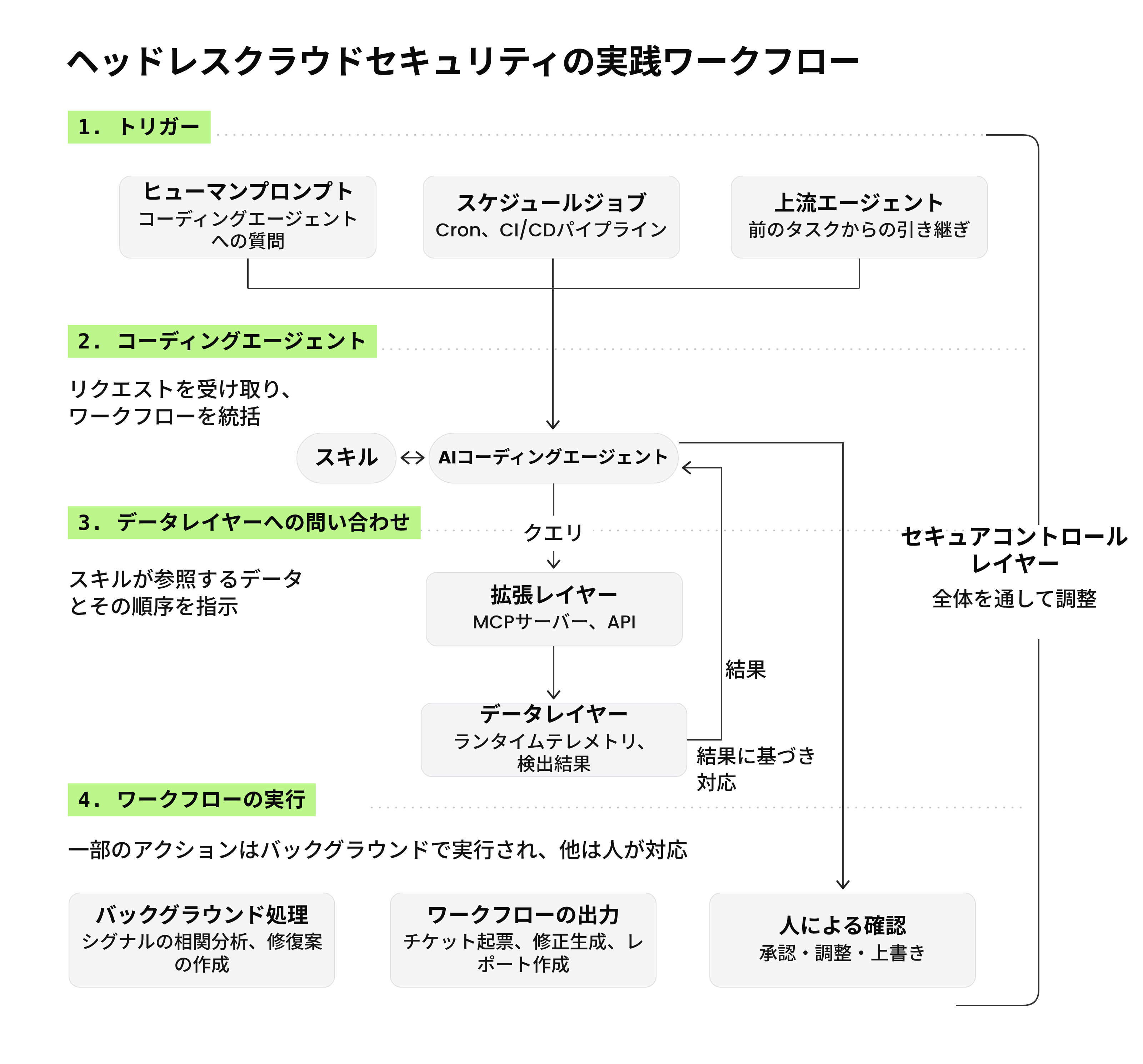
要するに、ヘッドレスクラウドセキュリティは、エージェントが最も得意とする作業をエージェントに、人間が最も得意とする作業を人間に委ねることで機能します。このアーキテクチャは、双方がそれぞれの役割を果たせるように構築されているのです。
以下は、ヘッドレスモデルにおける実際のクラウドセキュリティワークフローの例です。
ヘッドレスクラウドセキュリティが従来型モデルを上回る点
多くのクラウドセキュリティプラットフォームは、似たような機能リストを掲げています。ポスチャ管理、脅威検知、脆弱性スキャン、クラウドインフラストラクチャ権限管理(CIEM)などです。
ヘッドレスクラウドセキュリティアーキテクチャによって変わるのは、この機能リストそのものではありません。変わるのは、プログラムによる、エージェント主導の利用を前提としてプラットフォームが構築された結果、チームがそれらの機能を使って何ができるようになるか、という点です。
具体的に可能になることは、次のとおりです。
- ベンダーではなく、組織自身がワークフローを形づくる。
従来のクラウドセキュリティプラットフォームは、設計者が作った画面を中心に作業を組み立てます。一方、ヘッドレスプラットフォームは、基盤となる機能を直接公開します。チームは、自社のクラウド環境、リスクモデル、業務プロセスに合わせてワークフローを構成できます。プラットフォームがチームに適応するのであり、その逆ではありません。 - クラウドセキュリティが、すでに作業が行われている場所で機能する。
エンジニアやセキュリティチームは、ますますAIコーディングエージェント、チャットツール、IDEを通じて作業するようになっています。ヘッドレスプラットフォームには、APIとスキルを通じて、そうした環境の内部からアクセスできます。セキュリティの検出結果やアクションは、誰かが別のツールへコンテキストを切り替えるのを待つのではなく、クラウド作業が行われているその場所に現れます。 - トリアージと関連付けを並行して実施できる。
従来のクラウドセキュリティは、人間が検出結果を一つずつ順に読むことに依存しています。アラートを開き、調査し、対応を判断し、次に移る、という流れです。ヘッドレスアーキテクチャでは、エージェントが複数の検出結果に同時に取り組むことができます。ランタイム、ポスチャ、アイデンティティ、脆弱性の各データにまたがるシグナルを、単一の人間の目というボトルネックを介さずに関連付けられます。 - チームの人数を超えて拡張できる手続き的知識。
クラウドセキュリティのワークフローがスキルとして存在するようになると、それを実行するための専門知識は、シニアエンジニアの頭の中に閉じ込められたままではなくなります。脆弱性トリアージ用のスキルには、経験豊富なエンジニアが行うであろう対応が体系化されています。チームの誰もが、それを呼び出すことができます。新しい環境、新しいツール、新しいメンバーも、すべて同じ手続き的知識を活用できます。 - 検知から修復までの、より速い道筋。
エージェントが検出結果を調査し、修復案を作成し、承認を得るために提示します。各ステップを人間が調整する必要はありません。検出から修正までにかかる時間が短縮されます。
これらに共通しているのは、いずれも、最初からエージェントによる利用を前提として設計されたアーキテクチャに支えられているという点です。ヘッドレスクラウドセキュリティは、あらゆるループに人間が介在しなければならないという前提を取り払います。
ヘッドレスクラウドセキュリティを導入する際の6つの検討事項

ヘッドレスクラウドセキュリティの導入は、アーキテクチャ上の大きな転換です。これは、チームが意図的に計画を立てて取り組んだときに、最も効果を発揮します。
以下では、早い段階で決めておく価値のある事項を取り上げます。
要点:
ヘッドレスクラウドセキュリティは、アーキテクチャと運用面での規律が両輪となって発展したときに、最も成功します。アーキテクチャは、新しいことを可能にします。規律は、その新しいことを持続可能にするものです。
ヘッドレスクラウドセキュリティとエージェンティックセキュリティの比較
エージェンティックセキュリティとヘッドレスクラウドセキュリティは、区別しておく価値があります。両者は関連していますが、同じものではありません。
ヘッドレスクラウドセキュリティは、アーキテクチャに関する概念です。これは、データと機能がダッシュボードではなくプログラム可能なインターフェースを通じて公開される、クラウドセキュリティプラットフォームのあり方を表します。
エージェンティックセキュリティは、運用に関する概念です。これは、AIエージェントがデータを推論の対象とし、ワークフローを実行し、アクションを起こすという実際の動きを表します。
言い換えれば、ヘッドレスはプラットフォームを表し、エージェンティックはその操作主体を表します。
ヘッドレスへの移行が、セキュリティ業務をどのように変えるか
ヘッドレスクラウドセキュリティは、人々が時間を費やす対象を変えます。
セキュリティアナリストにとっては、その変化は「操作者」から「統括者」への移行です。エージェントがアラートの一次対応を担います。アナリストは、優れた調査とはどのようなものかを定義します。アナリストはエージェントが出した結果をレビューし、判断が必要な案件にはみずから介入します。
エンジニアリングチームやプラットフォームチームにとっては、その変化は「セキュリティを回避しながら作業する」から「セキュリティと共に作業する」への移行です。セキュリティの検出結果は、チームがすでに使っている環境に届きます。すでに操作しているのと同じコーディングエージェントを通じて届くのです。別のツールへコンテキストを切り替える必要はもうありません。
CISOにとっては、その変化は「アラート量の管理」から「意思決定の管理」への移行です。問われる問いは、「チームはすべてをトリアージできたか」から、「エージェントは、私たちが定めたポリシーの範囲内で行動しているか、そして人間は正しい事項を承認しているか」へと変わります。
要点: ツールを操作する時間は減り、ツールに指示を出す時間が増える。